
85 LANCO’s PORTABLE INFLATABLE TENTS SERVE AS TEMPORARY SHELTERS FOR UKRAINIANS
1. Background
Russia's war against Ukraine has had a significant negative impact on the Ukrainian energy sector. Due to their economic, humanitarian, and geopolitical importance, Ukrainian energy infrastructure facilities have been among the primary targets for the Russian army. Disruptions in power, gas, heat, and water supplies have significantly affected Ukrainians in targeted areas.
Since the start of Russia's full-scale invasion of Ukraine on February 24th, 2022, the Ukrainians encountered mounting difficulties in accessing essential utilities. The provision of electricity, gas, heat, and hot water became increasingly scarce, causing significant hardship across the country. Homes, hospitals, schools, and public institutions struggled to function optimally without a steady supply of electricity. Additionally, the diminishing availability of gas, heat, and hot water further exacerbated the challenges faced by the population, particularly during the colder months. The situation demanded immediate attention and collaborative efforts to keep the country’s energy sector's operational.
2. The Problem
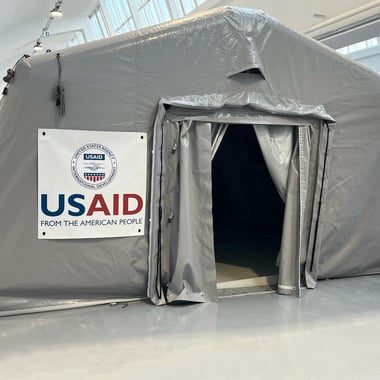
To respond to challenges, the United States Government, through the U.S. Agency for International Development (USAID) and its Energy Security Project (ESP), is enabling the Government of Ukraine and energy companies to continue operating the electricity, gas, and heating networks. USAID ESP is leading the charge to restore the energy sector, rehabilitate critical infrastructure destroyed by Russia's bombing, and increase resilience of the power system. As part of USAID’s assistance, the provision of heated temporary shelters is a crucial intervention to protect individuals during emergencies and provide them with a sense of home during these harsh times.
3. The Challenge
One of the primary challenges faced by the USAID Energy Security Project (ESP) in Ukraine revolved around the accelerated procurement of critical equipment and services for Ukrainian utilities and power systems. The ability of bidders to swiftly deliver the required goods, materials, and services was a crucial evaluation criterion. The project emphasized the need for firms to demonstrate their capability to fulfill orders accurately, rapidly, and completely in order to be considered for contract awards.
Rapid deployment shelters were among the equipment procured. These shelters were expected to be manufactured and assembled within a short timeframe, ensuring timely deployment. Additionally, the supporting and enclosing structures of the shelter, along with its individual components such as doors and hatches, had to meet stringent criteria to ensure strength, reliability, and safety once assembled.
Moreover, the shelters had to be equipped with ventilation and heating systems to provide suitable conditions for the individuals seeking refuge, and have at least two entrances with doors ensuring ease of access. Lastly, the shelters had to be waterproof, with a tight seal to prevent water from penetrating and compromising the integrity of the shelter.
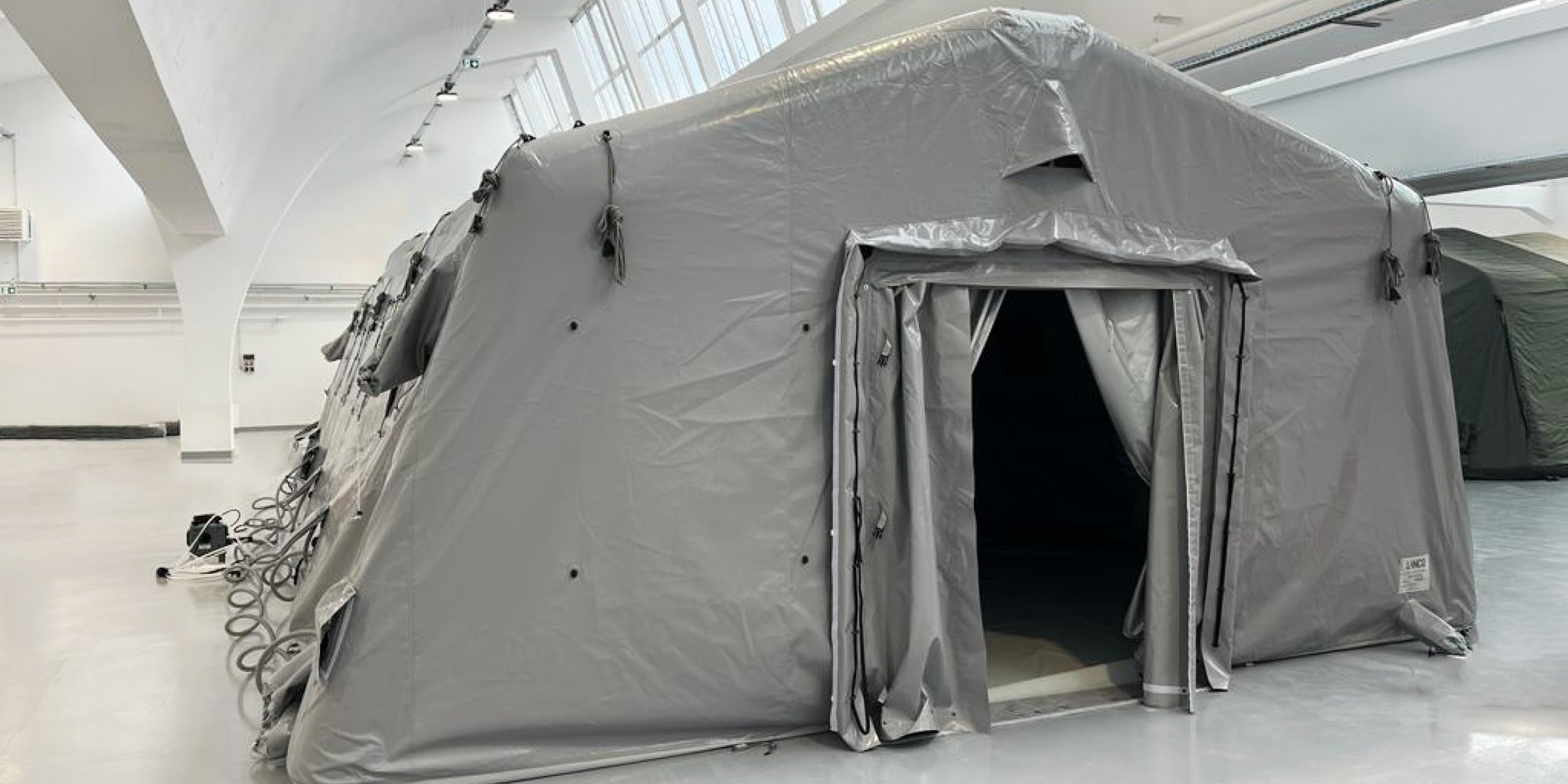
LANCO’s pneumatic technology met the above requirements. Their easily transportable and assembled tent shelters could be promptly deployed in emergencies. Recognizing the importance of rapid response, LANCO’s pneumatic shelters offered safe solutions for hospitals, tent settlements, warehouses, and headquarters.
4. The Approach
For this project, LANCO employed the AZF 6-78 model, which underwent rigorous evaluation to ensure its durability and resilience. The structure was designed to withstand a snow load of 20 kg/m2 and wind speeds of up to 100 km/h. With an internal area of approximately 76 m2 the tent measured 12.35 m in length, 6.30 m in width, and 3.12 m in height, accommodating around forty people. The tent floor of polyester fabric sheets coated with PVC was securely connected to the tent's cover and frontals through welding, completely covering the tent's surface. All the materials used ensured the tent's complete waterproofing and resistance to mold. Furthermore, the tents do not require any specific maintenance and can be easily repaired, if necessary.
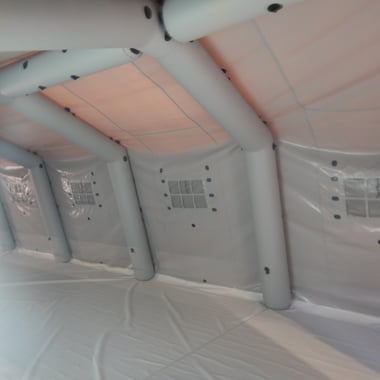
The tents’ pneumatic structure with an airtight PVC-coated fabric, the internal insulation sheet consisted of frontal and rear sections made of cotton fabric joined together with Velcro tape. In short, LANCO's portable inflatable tents are reliable, durable, and easily assembled shelters.
5. The Result
In addition to 85 portable inflatable tent shelters, LANCO provided all the necessary equipment to ensure their functionality and usability in emergency situations. This helped the regional units of the State Emergency Service of Ukraine and local city councils to increase their ability to shelter people in emergencies, allowing people to stay warm and connected.