
INFECTIOUS DISEASE TREATMENT MODULE (IDTM) BASED ON OUR LOW-PRESSURE INFLATABLE AZF TENTS
1. The Problem
Increasingly frequent and faster-spreading infectious disease epidemics are fueled by climate change, population growth, unplanned urbanization, and global interconnectedness. This leads to emerging and re-emerging diseases, including zoonoses, with global potential for rapid transmission.
In recent years, infectious disease treatment centers have advanced, focusing on patient, staff, and community needs. They aim to improve medical care, infection prevention, patient comfort, and community acceptance. INITIATE² (initiative that unites emergency responders, research institutions, and academia to develop innovative solutions and training for health emergencies) needed to develop a rapidly deployable treatment module to complement existing facilities, ensuring quality care during emergencies.
2. The Challenge
The design principles for the infectious disease treatment module (IDTM) included:
a. Contact-enabling design based on transmission design
b. Climate-responsive and energy-efficient design.
c. Resilience to natural hazards and disruptions.
d. Accessible and inclusive spatial design for diverse populations.
e. Cultural adaptability and participation.
f. Modularity for flexible layout and surge capacity.
g. Easy constructability for quick setup.
h. Cradle to cradle and reuse design considerations.
i. Minimal local maintenance requirements.
j. Adaptability and Infection Prevention and Control (IPC).
k. Intuitive usability and wayfinding.
l. Transportability on various modes of transportation, from tricycles to boats, for easy mobility.
-1.jpg?width=380&height=380&name=WFP-INITIATE%20IDTM%20AZF%20white%20(25)-1.jpg "WFP-INITIATE IDTM AZF white (25)-1")
The Infectious Disease Treatment Module (IDTM) had to be a versatile, self-contained unit designed for rapid deployment in treating infectious diseases. It had to be able to adapt to various climates, dimensions, and patient needs. Each IDTM would accommodate two patients and include treatment, resuscitation, isolation, and nursing areas. Users of the IDTM will include individuals of all ages, genders, cultures, religions, and disabilities, encompassing a diverse range of backgrounds and health conditions.
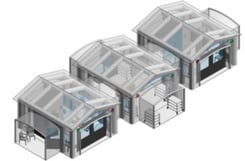
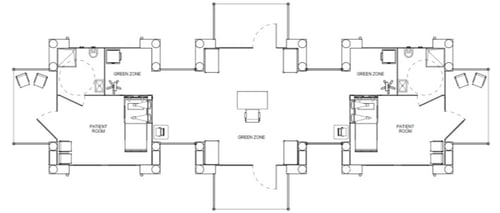
The module had to be designed with straight walls to increase space capacity and enable improved interior usability. Each IDTM had to be divided into three pods:
a. a central staff area of 20m2 (5x4 m) to allow a constant observation of patients without wearing PPE and in the first days of the emergency can be used also as a donning, office and/or pharmacy, and
b. two individual patient rooms of 20m2 (5x4 m).
3. The Approach
The module was envisioned as a low-pressure inflatable structure, destined for the outdoors as a standalone unit or as a temporary indoor space within existing facilities. This module was designed to be carried on a pick-up truck in smaller carry-on bags, weighing approximately 200 kg for a 20 m² pod. Being inflatable, it would be set up swiftly and easily within a few minutes.
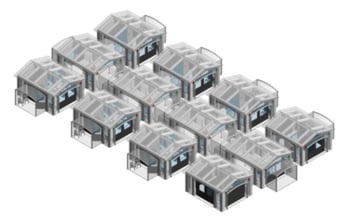
The inflatable structure was built to withstand at least 80 km/h wind resistance on every surface and the system design ensured improved natural ventilation that would limit contaminant dispersion in the multiple IDTM configurations settings. The modularity of the IDTM was ensured by 4 large identical interchangeable openings to enable easy connection on both axes. All structures can be connected through 4 connectors which are welded on one side to the fabric of the module and are self-sufficient due to their own inflatable structure.
-1.jpg?width=300&height=300&name=WFP%20INITIATE%20IDTM%20AZF%20WHITE%20(10)-1.jpg "WFP INITIATE IDTM AZF WHITE (10)-1")
4. The Result
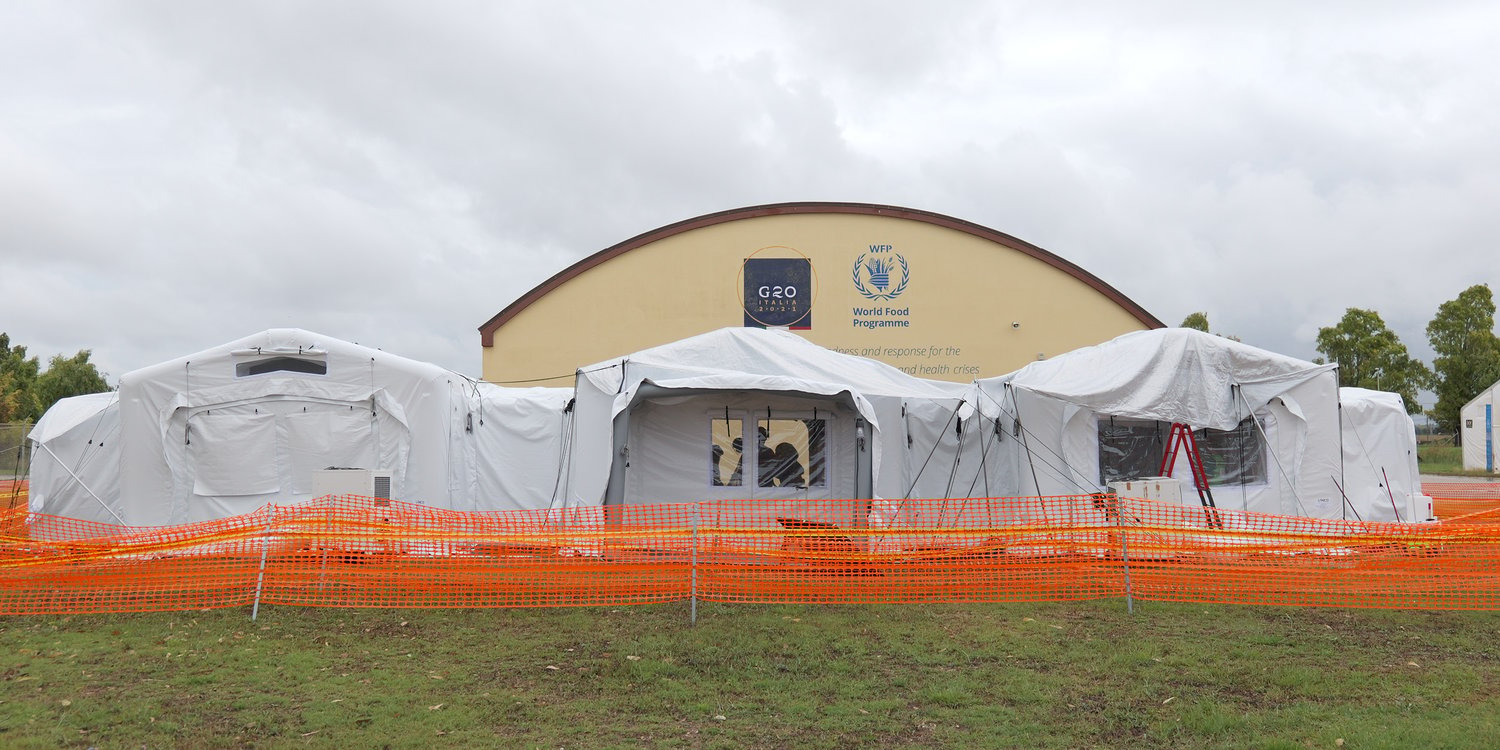
A prototype of the IDTM was manufactured and deployed in the field in less than 3 months from contract award. Our AZF low-pressure inflatable tent was redesigned to fit the need for increased space capacity and was delivered fitted with a double inner liner:
a. silver coated reflecting material especially developed for tent insulation with a very low Lambda value which decreases the heat flow between the inside and the outside, making it one of the best thermal insulators on the market despite it being extremely lightweight and compact.
b. an antimicrobial fabric especially designed for the healthcare industry which inhibits the growth of bacteria. With antiviral properties, 100% waterproofness and high tear resistance, this fabric is the best option for healthcare applications.
To ensure adequate visibility to patient isolation rooms transparent screens were provided, all fitted with manipulation gloves apertures (both height and breadth), designed to cover the broadest anthropometric constraints and ensure the care takers’ ability to perform their roles accurately and safely.
The connectors, that can act as vestibules or just extra space for the patient isolation rooms, are also fitted with the same inner liners to ensure the same level of protection across the entire system.
.jpg?width=300&height=300&name=WFP-INITIATE%20IDTM%20AZF%20white%20(7).jpg "WFP-INITIATE IDTM AZF white (7)")
.jpg?width=300&height=300&name=WFP-INITIATE%20IDTM%20AZF%20white%20(22).jpg "WFP-INITIATE IDTM AZF white (22)")
.jpg?width=300&height=300&name=WFP-INITIATE%20IDTM%20AZF%20white%20(24).jpg "WFP-INITIATE IDTM AZF white (24)")
LANCO offers sunroofs as optional equipment for most tent models we manufacture. The IDTM was supplied with sunroofs which are highly recommended especially in extreme climates. It is advisable to use them for sun or snow protection because this helps with both inner temperatures and increased snow load resistance.
Each tent was supplied with an inflation system which includes the electrical pump and the hose system needed for simultaneous inflation of all arches for a swift and easy setup. As accessories, LANCO also supplied the electrical system and the transport and storage boxes, as well as the rigid modular flooring system, making the IDTM a turnkey system, quickly deployable and fully fitted for operation in the harshest of environments.
This innovative solution will be the standard in support of readiness and response capabilities in health emergencies.